Global Chickpea Consumption Trends: From Staple to Superfood.
Chickpeas—also known as garbanzo beans—have long been a dietary cornerstone in the Middle East, North Africa, and South Asia. Over the past decade, their global popularity has surged as consumers increasingly seek plant-based protein and nutrient-dense foods.
Why Consumption Is High in the Middle East
In the Middle East, chickpeas are both a cultural and culinary essential. The region’s high per-capita consumption—especially in Lebanon, Jordan, Turkey, and Egypt—is driven by several key factors:
- Cultural Heritage: Centuries-old use in Levantine and Mediterranean cuisines like hummus and falafel.
- Affordability: A cost-effective source of protein and iron compared to animal-source foods.
- Dietary Preferences: Alignment with vegetarian, vegan, and halal dietary requirements.
- Urbanization: Packaged hummus and roasted chickpea snacks are now becoming major retail staples in modern cities.
Rising Global Demand
Chickpeas are increasingly viewed as a superfood in Europe, North America, and East Asia. According to 2024 market data, the global chickpea market value exceeded USD 14.8 billion in 2023 and is projected to grow at a CAGR of 5.5% through 2030.
- Plant-Based Shifts: Vegan and flexitarian diets are fueling demand for legume-based proteins.
- Gluten-Free Innovation: Chickpeas are the primary ingredient in a new wave of pastas, flours, and protein bars.
- Sustainability: Chickpeas enrich soil nitrogen levels and require significantly less water than other major crops.
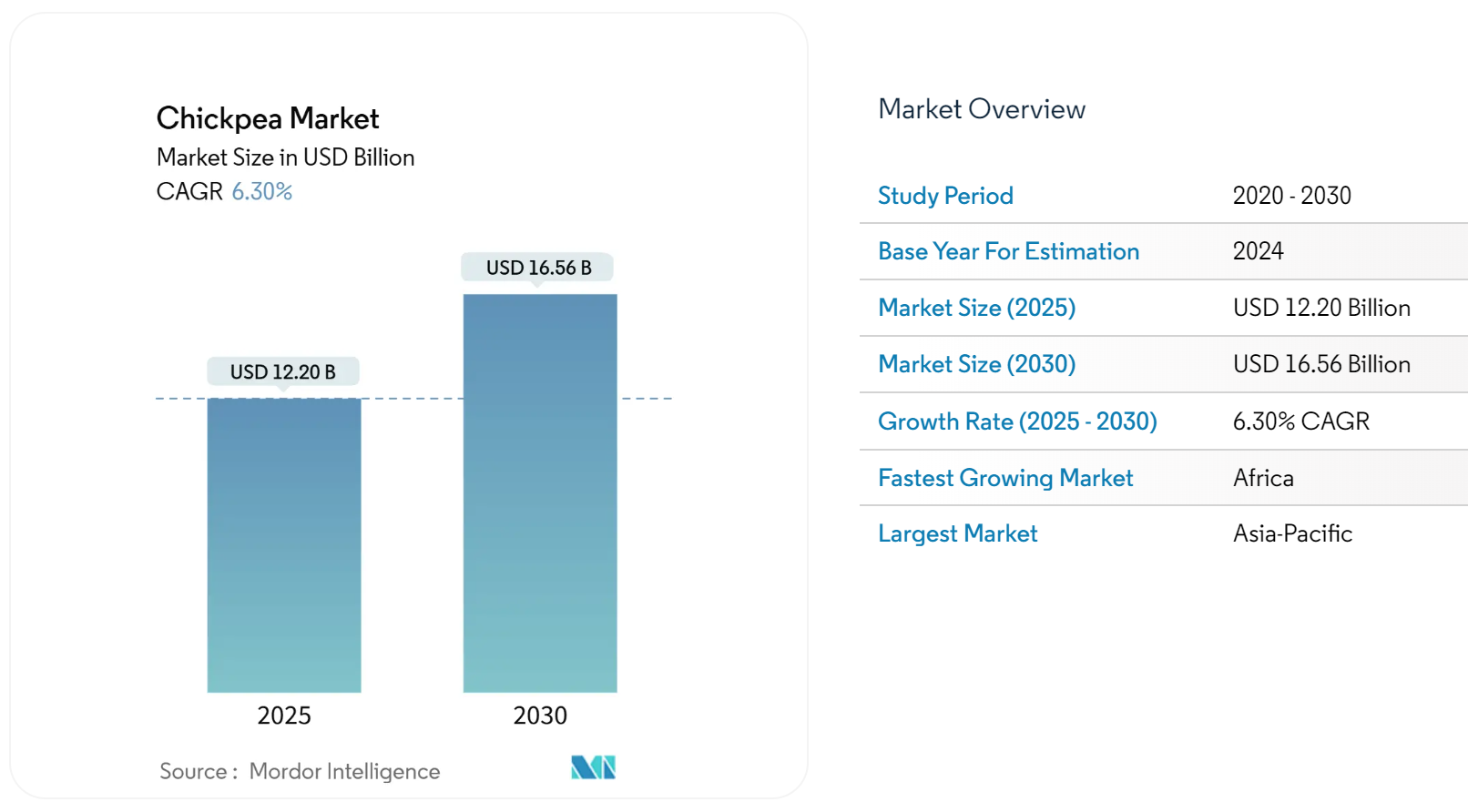
Projected 5.5% CAGR growth driven by health and sustainability trends. Source: Mordor Intelligence / FAO
Major Producers and Exporters
| Country | Production (2024, Mt) | Primary Export Markets |
|---|---|---|
| India | 10.5 | Middle East, Europe |
| Australia | 1.7 | South Asia, Middle East |
| Turkey | 0.7 | Europe, MENA |
| Myanmar | 0.5 | China, South Asia |
| Ethiopia | 0.4 | Middle East, EU |
Notably, Turkey and Ethiopia have become key exporters to Gulf markets due to geographical proximity and consistent quality standards.
Emerging Markets: China and Japan
Although traditionally low consumers, China and Japan are seeing a surge in chickpea imports—especially for snack foods, tofu alternatives, and protein supplements. Chickpea flour and roasted snacks have successfully entered mainstream retail channels, driven by health-conscious consumers and fitness trends.
Challenges and Market Outlook
Despite strong demand, the market faces structural risks:
- Climate Risk: Yields are highly sensitive to droughts, especially in semi-arid production zones.
- Price Volatility: National export bans and trade restrictions can disrupt global supply chains unexpectedly.
However, technological improvements in seed varieties and irrigation systems are expected to stabilize yields and strengthen trade reliability in the coming years.
Conclusion
Chickpeas are evolving from a regional staple to a global health commodity. While Middle Eastern consumption remains foundational, expanding global markets are reshaping production and trade flows. With the world’s growing appetite for sustainable protein, chickpeas are a strategic export crop bridging nutrition, sustainability, and profitability.
Facilitate Your Global Trade.
By acting as a trusted intermediary, we help our supplier partners focus on what they do best—producing quality grain and food—while we take care of the rest.