Global Wheat Market Forecast 2025–2030: Price Trends & Outlook.
Wheat remains one of the world’s most critical staples, feeding billions across continents. Between 2025 and 2030, the global wheat market is poised at a crossroads where climate volatility and shifting demand patterns will reshape trade flows.
Introduction
Pressure from geopolitical risks and intensifying climate change effects are expected to influence competitive advantages in the coming years. For traders, importers, and intermediaries, having a clear outlook is no longer optional—it’s essential for strategic positioning in an increasingly tight market.
Current Market Snapshot & Recent Trends
According to the FAO’s Cereal Supply and Demand Brief, global trade in wheat is forecast to grow by 4.9% in the 2025/26 cycle. Consumption is projected to rise significantly over the coming decade, with India and China contributing nearly 30% of that growth.
- U.S. Market Rebound: Export volumes are expected to reach 850 million bushels, the highest since 2020/21.
- Mixed Production: Global estimates hover around 806 million MT, slightly above previous years but vulnerable to weather shocks.
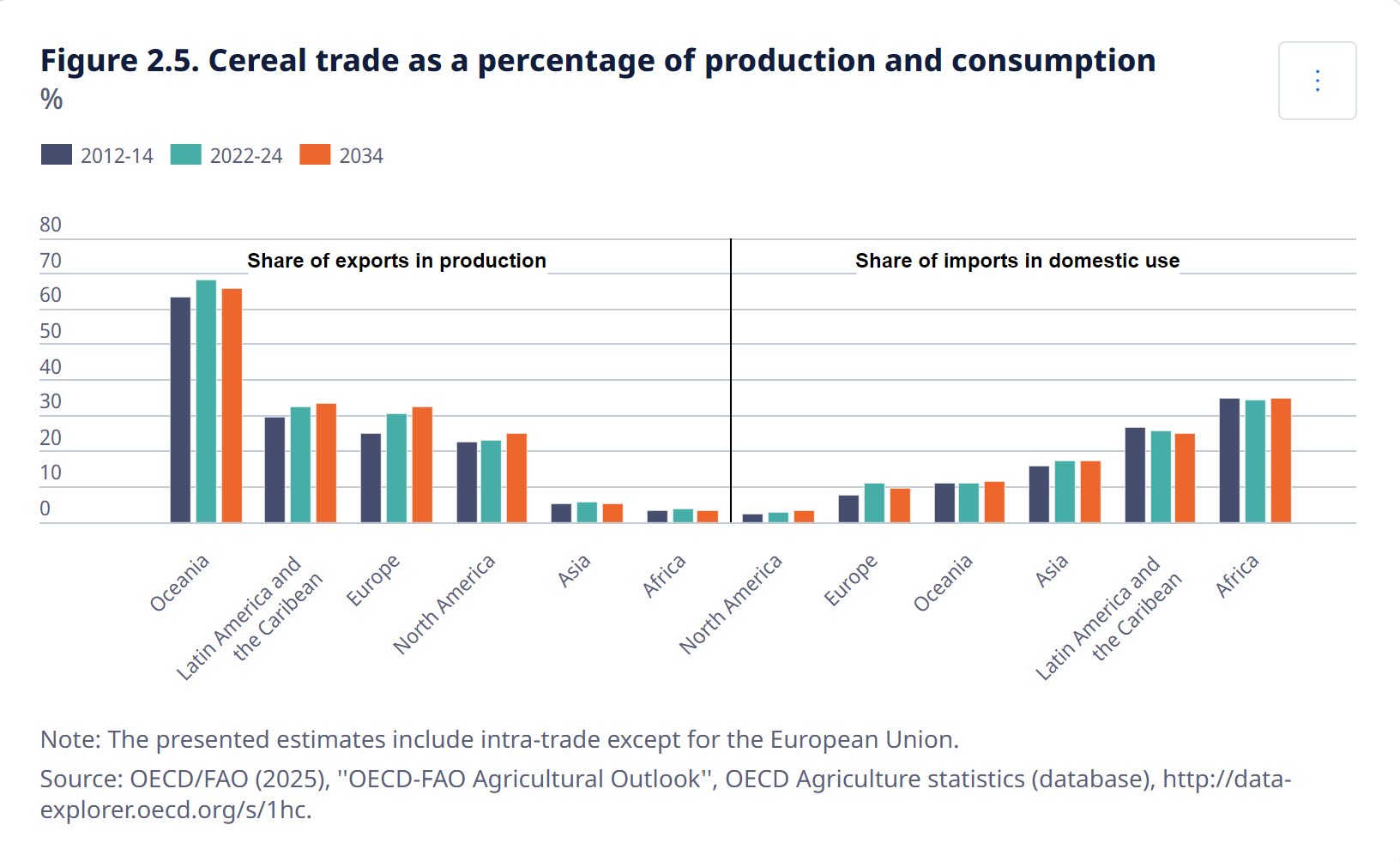
Analysis of trade flows as a percentage of global production and consumption cycles.
Price Forecast (2025–2030)
Analyst consensus points toward moderate upward pressure on prices through 2026. While abundant production in Europe and Russia could cap immediate spikes, long-term trends remain bullish due to rising input costs and logistics hurdles.
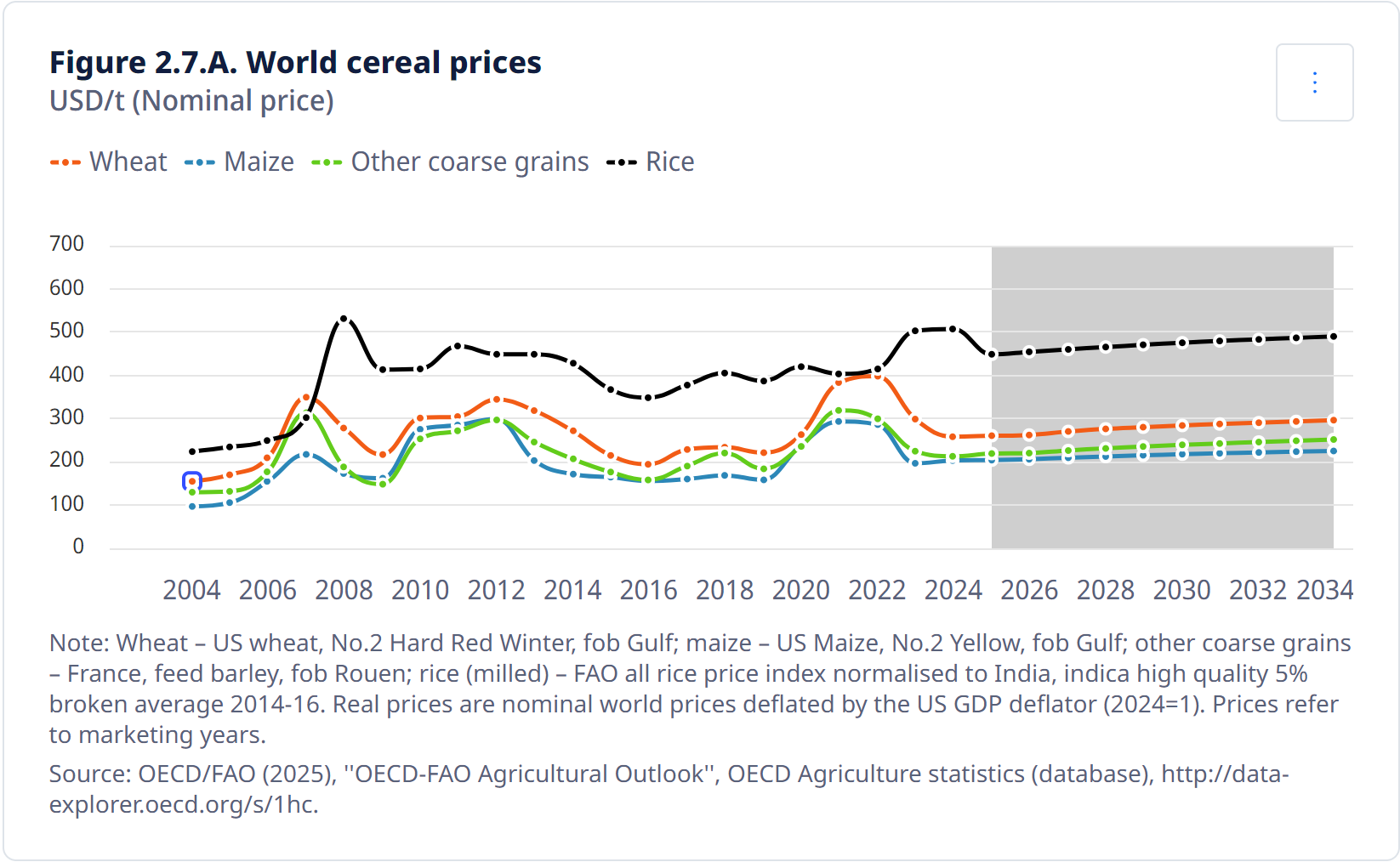
- Futures Banding: 2025 futures are expected to fluctuate between US$565–US$700/MT depending on origin and freight influences.
- Regional Caps: Fitch Solutions suggests abundant supplies in specific regions may place a temporary cap on mid-2025 pricing.

Projected volatility band for global wheat indices (July 2025 data points).
Trade Flow & Demand Outlook
Trade is expected to rebound as Asian demand picks up and emerging importers in Africa and the Middle East become even more critical to global volume. Export competition among the U.S., EU, Russia, and Australia will intensify, meaning margins for intermediaries will depend heavily on logistics efficiency.
Strategic Takeaways for Traders
- Hedge Smartly: Use futures or price locks to mitigate the certainty of high volatility.
- Diversify Sourcing: Maintain flexibility between Black Sea, North American, and South American origins to avoid regional supply blockages.
- Operational Value: Focus on logistics, inspection, and faster documentation to win business in tight markets.
Conclusion
The 2025–2030 period will reward those who prioritize sourcing diversity and logistics resilience. As a trusted intermediary, we bridge the gap between global production and local demand, ensuring that our partners remain competitive regardless of market shifts.
Secure Your Wheat Supply.
Are you looking to optimize your grain procurement or find reliable export channels? Connect with us to join our exclusive supplier and buyer network.