Bottled Water, Heat, and Nano-Plastics: Hidden Risks.
Bottled water has become a global staple due to concerns over tap water safety and convenience. However, long-term reliance on bottled water poses serious health risks, especially when bottles are exposed to heat and direct sunlight.
Introduction
Global consumption is growing at over 6% annually as trust in municipal infrastructure declines in many regions. However, when stored improperly, plastic bottles release microplastics and nanoplastics into the water, alongside harmful chemicals like BPA and phthalates. Over time, these substances can disrupt hormones and contribute to metabolic or cardiovascular concerns.
Risks of Heat and Sunlight Exposure
- Nanoplastic Release: Research indicates that a single liter of bottled water may contain over 240,000 plastic particles, with significantly higher levels in bottles exposed to direct UV rays.
- Chemical Leaching: High temperatures accelerate the release of BPA, which is linked to reproductive and endocrine disorders.
- Storage Bottlenecks: In many emerging markets, bottled water is frequently transported in open trucks and stored under the sun, raising contamination risks before the product even reaches the shelf.
Growing Global Dependence
The demand for bottled water is rising globally, driven by rapid urbanization, increased mobility, and declining trust in tap water quality across Asia and Africa. Because of its relative affordability compared to other packaged beverages, it has become the default hydration source for millions.
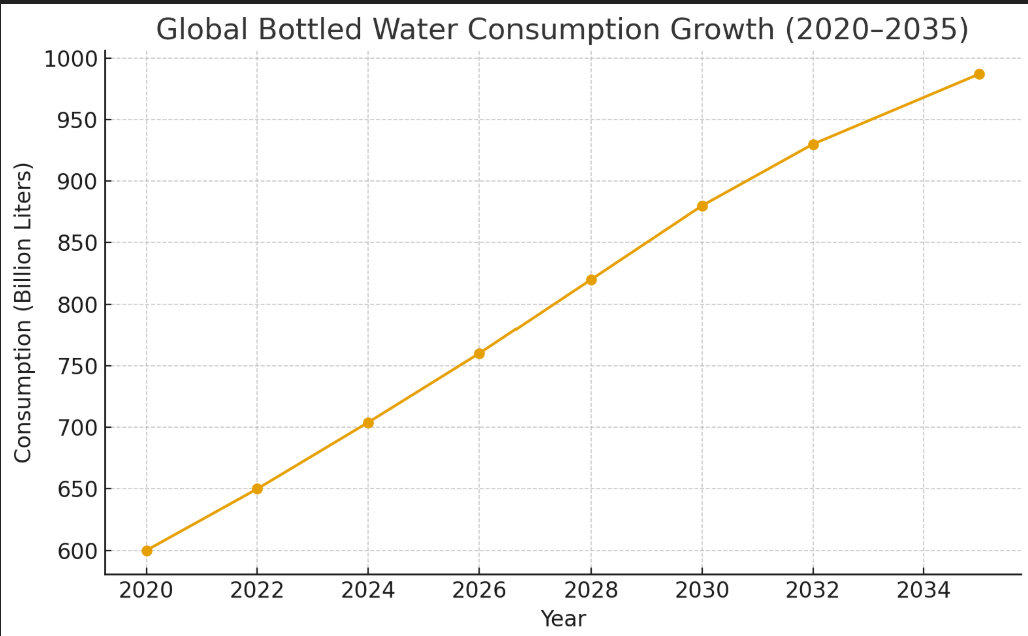
Demand is projected to nearly double by 2035, with Asia-Pacific and Africa leading the growth. Source: IBWA / Statista
Health Costs of Nano-Plastics Exposure
The ingestion of micro- and nano-plastics is a silent, cumulative health risk. While short-term symptoms may not be obvious, long-term research links exposure to cardiovascular issues—where nanoplastics are found in arteries—as well as metabolic disorders such as obesity and diabetes.
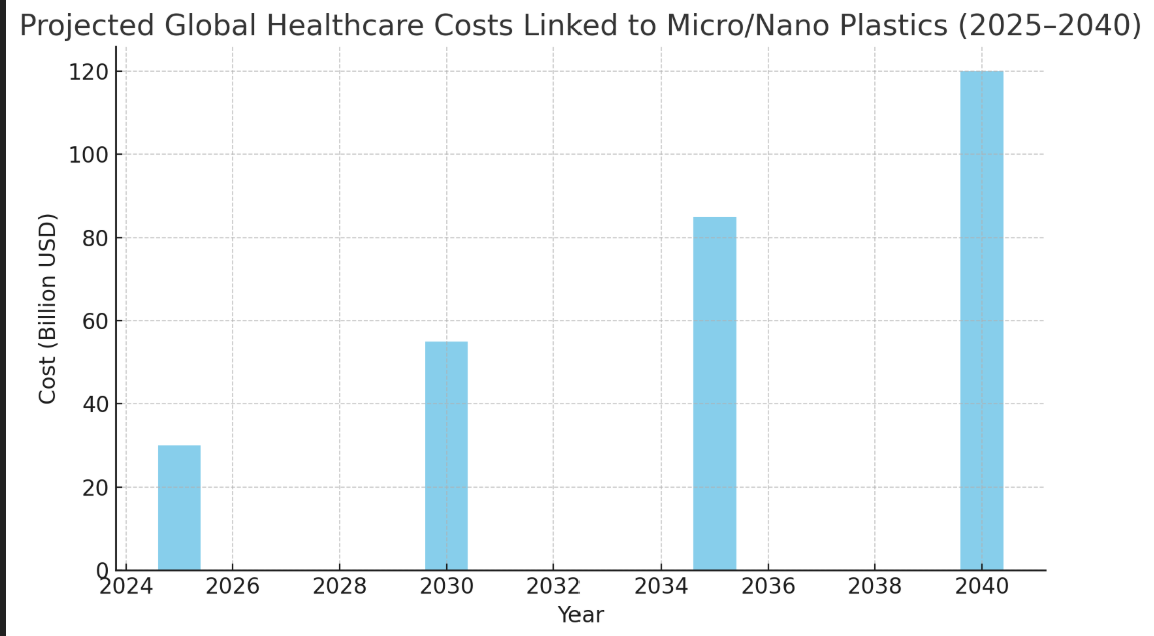
Anticipated increase in healthcare costs linked to plastic exposure, particularly in middle-income nations. Source: OECD / Lancet
Government Actions and Industry Responses
Regulators are beginning to implement proactive measures to reduce these risks:
- Eco-Friendly Packaging: Moving toward paper or cardboard secondary packaging to reduce overall plastic footprints.
- Shaded Logistics: New rules requiring bottles to be transported and stored in temperature-controlled or shaded environments.
- Expiry Date Enforcement: Strict labeling to reduce the duration of plastic-to-water contact.
- Certification Standards: More rigorous testing and monitoring of nanoplastic concentrations in commercial water.
Conclusion
Bottled water is a growing necessity, but its hidden risks—from nanoplastics to chemical leaching—could translate into serious health costs within the next two decades. Governments, suppliers, and consumers must prioritize safer packaging and policy-driven quality standards. Without intervention, the convenience of today may become a global health crisis tomorrow.
Secure Your Supply Chain.
We work with suppliers to ensure high standards of storage and logistics, protecting the integrity of food and beverage shipments from farm to consumer.