Global Food Trade in 2025: Navigating Tariff Challenges.
In 2025, the global food trade landscape is characterized by a complex interplay of factors, including shifting consumer demands, climate change impacts, and evolving trade policies. Among these, import tariffs have emerged as a significant influence, reshaping trade flows and affecting stakeholders across the supply chain.
Global Food Trade Trends
The global food trade continues to experience growth, driven by factors such as population increases, urbanization, and changing dietary preferences. However, this growth is uneven, with developing countries often facing higher tariffs that limit their access to global markets.
According to the United Nations Conference on Trade and Development (UNCTAD), high import tariffs can raise costs for businesses and consumers, potentially curbing growth and competitiveness. Tariff escalation, where higher tariffs are applied to processed goods compared to raw materials, discourages developing economies from exporting value-added goods, hindering industrialization.
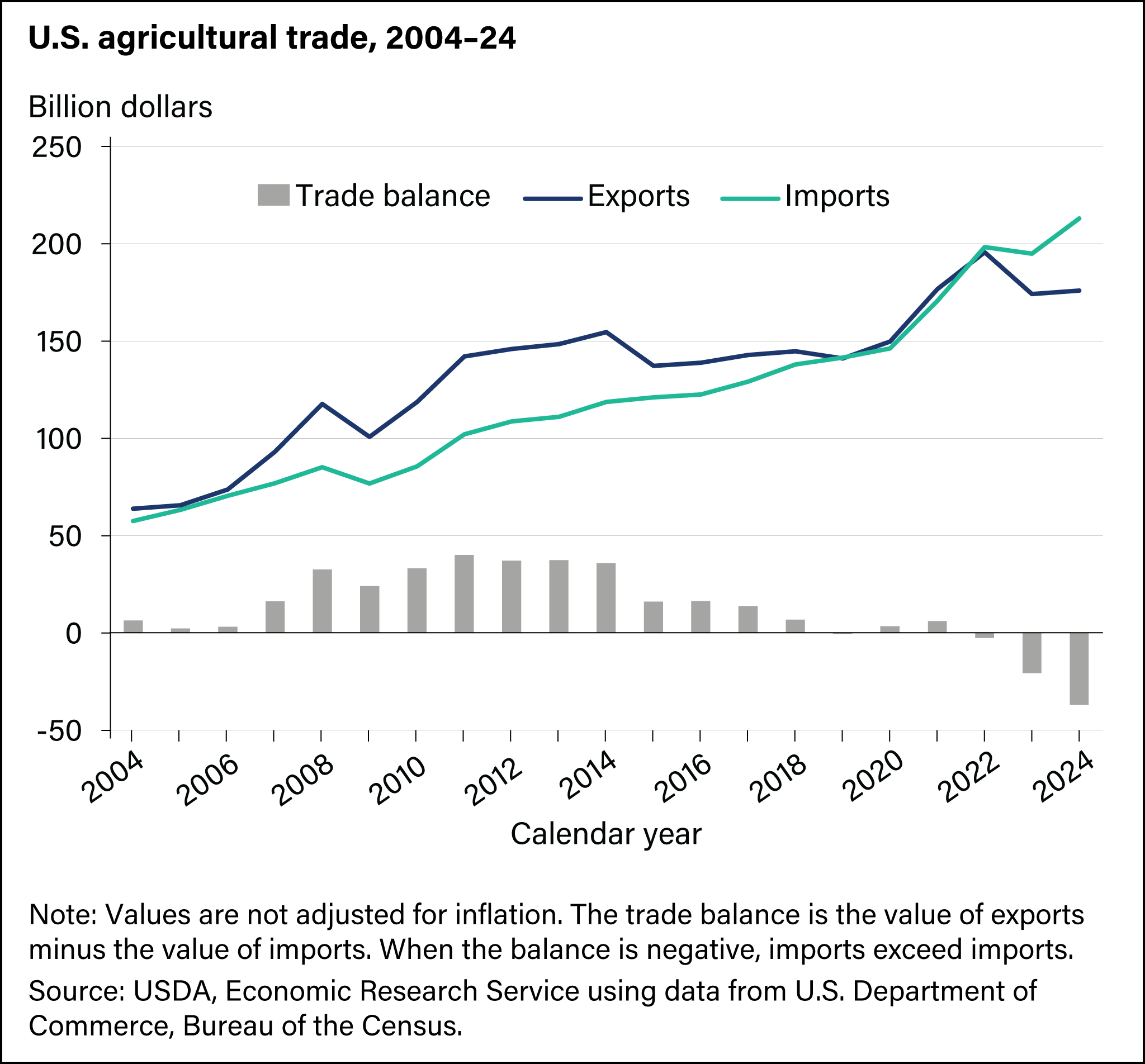
This chart illustrates the steady growth in global agricultural export values over the past two decades, highlighting the sector's resilience and adaptability. Source: ERS / UNCTAD
U.S. Agricultural Exports by Commodity (2024)
The data showcases the diversity of U.S. agricultural exports, with soybeans, corn, and beef leading the way in 2024. Despite the strength of these exports, the market must navigate the rising costs of imports which outpaced export values in recent cycles.
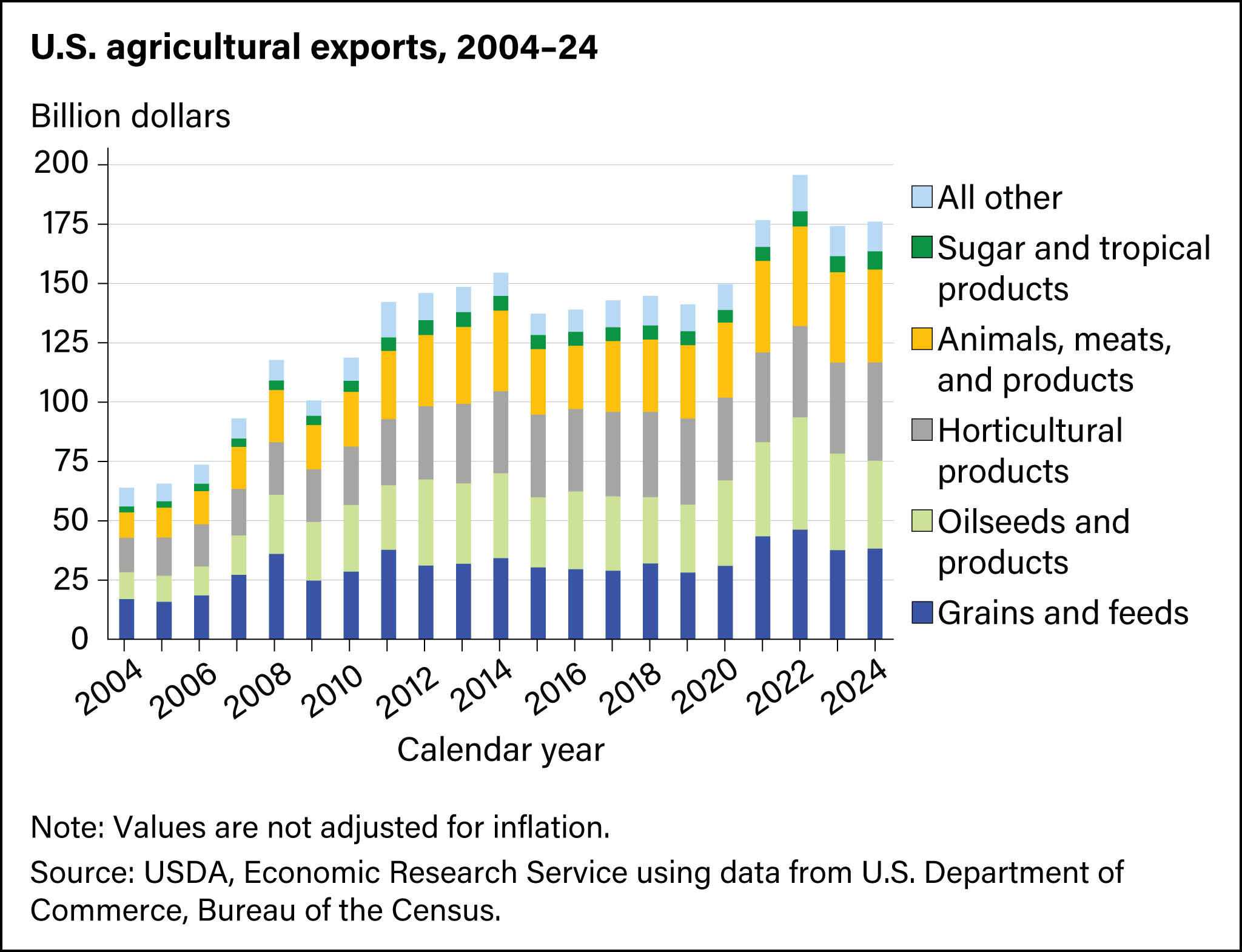
Diversity of U.S. agricultural exports highlighting top-performing commodities. Source: USDA Economic Research Service
Impact of Import Tariffs on Food Trade
- Increased Costs for Importers: Tariffs on imported food items have led to higher prices for consumers and businesses. For example, tariffs on specialty cheeses and wines have made these products more expensive in the U.S. market.
- Supply Chain Disruptions: Tariffs have disrupted established supply chains, prompting businesses to seek alternative suppliers or adjust their sourcing strategies.
- Retaliatory Measures: Countries affected by tariffs have implemented their own trade barriers, further complicating international food trade dynamics.
Conclusion
While global food trade continues to grow, the introduction of import tariffs presents challenges that require strategic responses from stakeholders. Businesses must adapt by exploring new markets, diversifying supply chains, and advocating for fair trade policies to ensure the continued flow of food products worldwide.
Bridge the Gap with GrainLink Global.
By acting as a trusted intermediary, we help our supplier partners focus on what they do best—producing quality grain and food—while we take care of the rest.